
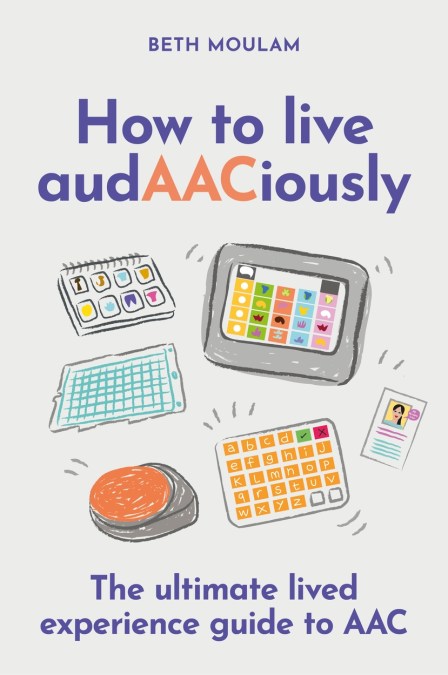
Having communication gives us power to be ourselves, to learn and make sense of the world around us. Both the right and need to communicate runs as a golden thread throughout all our lives.
Being an augmentative and alternative communication (AAC) user means that it is often harder to get your voice heard, listened to and understood. AAC users come from all walks of life and have very different needs – whether they are autistic, living after a stroke or brain injury, or have a lifelong condition such as cerebral palsy. What unites them is that AAC provides a way to connect with the people around them.
Written by Paralympian and disability advocate Beth Moulam, this book is the go-to guide to everything AAC. From the first uncertain days with a device, through the challenges of school, teenage years and the leap to independent living, the chapters offer tools and frameworks to build partnerships. You’ll find the confidence to advocate for yourself as an AAC user and lead with authenticity and audAACity.
It also includes sections for communication partners, with advice for what to look out for when communicating with AAC users, active listening and how to support at home, school and in the wider world.
Being an augmentative and alternative communication (AAC) user means that it is often harder to get your voice heard, listened to and understood. AAC users come from all walks of life and have very different needs – whether they are autistic, living after a stroke or brain injury, or have a lifelong condition such as cerebral palsy. What unites them is that AAC provides a way to connect with the people around them.
Written by Paralympian and disability advocate Beth Moulam, this book is the go-to guide to everything AAC. From the first uncertain days with a device, through the challenges of school, teenage years and the leap to independent living, the chapters offer tools and frameworks to build partnerships. You’ll find the confidence to advocate for yourself as an AAC user and lead with authenticity and audAACity.
It also includes sections for communication partners, with advice for what to look out for when communicating with AAC users, active listening and how to support at home, school and in the wider world.
Reviews
Thoughtful, inclusive and holistic. This book considers AAC across the day and the lifespan. The importance of valuing all communication and of having skilled communication partners shines through. This will be a valuable resource for AAC users and all of their supporters.
How to live audAACiously is absolutely packed with tips about how to navigate life as an AAC user. Whether you are an AAC user, a family member, a social worker or student, this book is indispensable!
Beth Moulam expertly weaves her lived experience as a multi-modal communicator and retired Paralympian into a practical guide, empowering others to have agency as they navigate life as communication aid users. A must-read primer for anyone seeking to be a true ally for individuals who do not use speech as their primary means of communication.
Beth Moulam's How to live audAACiously is an adventure into Augmentative and Alternative Communication (AAC), covering early learning, growing up and becoming independent as a person who uses AAC. Beth invites the reader into her life, and cites many others who use AAC, to explore the reality of a world that expects a human voice. Dreams can become a reality, if the opportunities are given to you or created. The frustrations are real. Conflicts are real. Safety comes first. The road to independent living is not easy, as Beth has discovered. Training Communication partners/support workers takes time but the investment pays off when confronted with an emergency situation. This book is an important read in understanding the strength of the individual needed to make dreams of a person who use AAC come true.
I highly recommend this practical, no-nonsense guide to AAC. Offering an expert, insightful, and refreshingly ambitious perspective, it's an essential read or listen for AAC users, families, teachers, and clinicians alike. Whatever brings you to AAC, you're sure to find thought-provoking ideas, useful strategies, and lots to reflect on.
Moulam's guide to living audAACiously does something I almost never see: she writes to the reader who uses AAC, not only to those supporting us. Moulam also describes options that exist in reality but are rarely noted in published work. A resource well worth the read!
This much-needed, accessible guide brings lived experience and practical wisdom to the core of AAC. Beth Moulam offers inspiration and hard-won insight on every page, making this a valuable resource for AAC users, families, and professionals alike.
This book is extraordinary. Beth brings lived experience, practical wisdom, and honesty together - and her TAACA reflective model is a gift, helping readers turn insight into action. It's the guide many of us have needed. It will support AAC users, families, and the professionals around them
This is a very practical guide to AAC that can be in used in many scenarios and with many people. The book portrays the 'gold standard' of AAC use. Empowerment certainly comes through strong and hard. The checklists and thoughts around independent living will be valuable to families/professionals supporting young people with more complex communication needs who will transition to different types of adult living.